! STOP BENDING NOW !

Sunday, 30 September 2018

Shriners Hospitals help children achieve dreams

Seventeen-year-old Nayeli V. had one dream: to have surgery for scoliosis. She had been receiving treatment for the condition since she was 8 years old in her hometown in Manta, Ecuador.
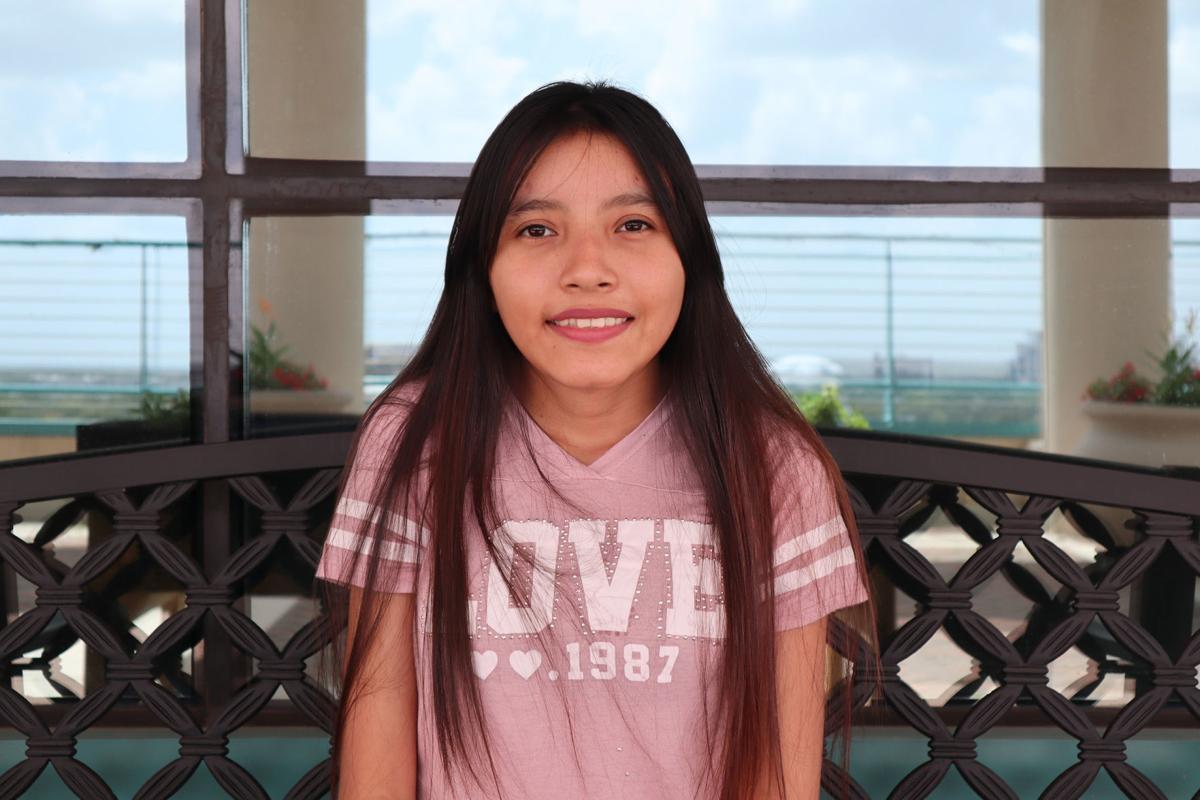
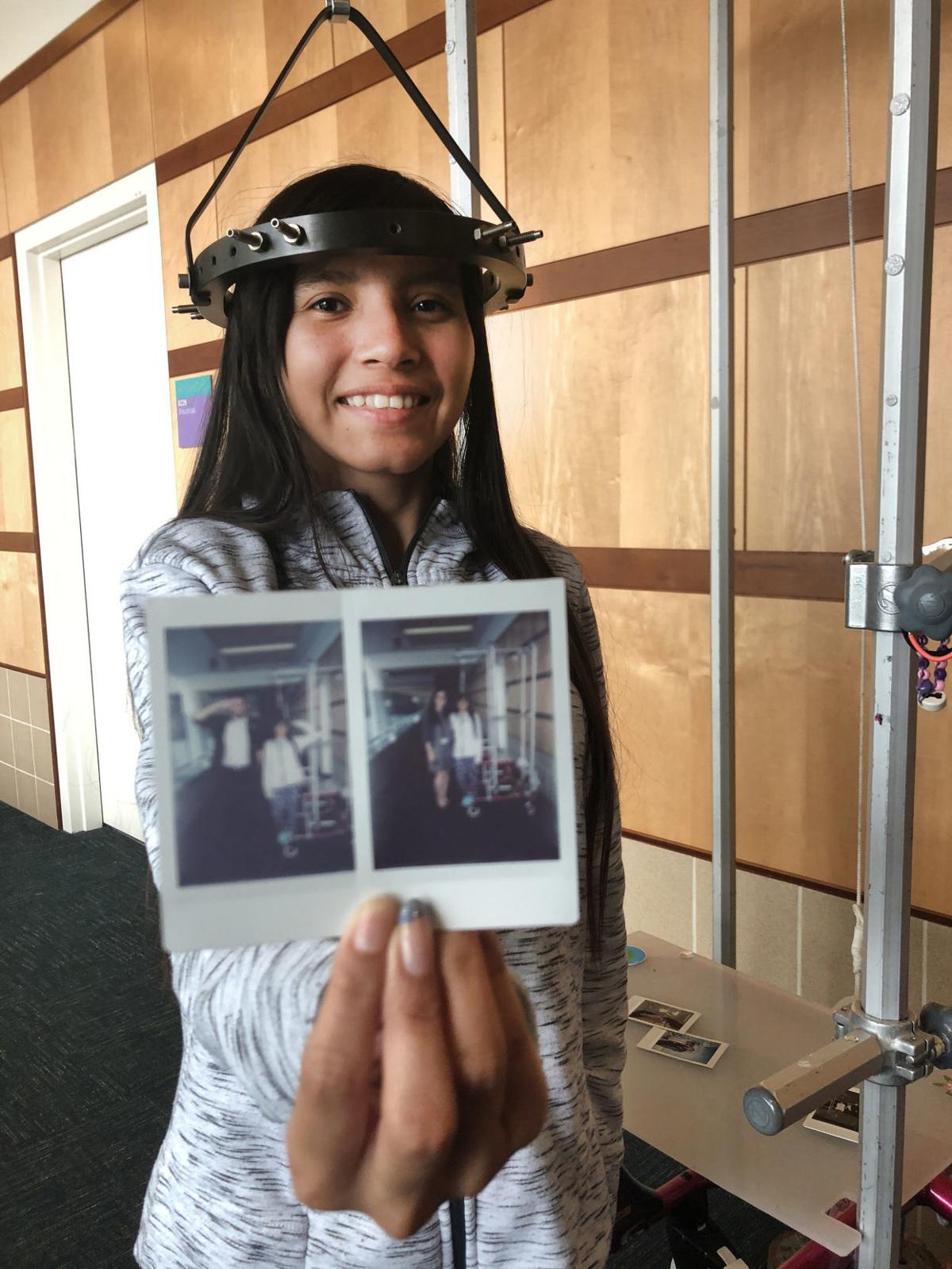
Naveli After.jpg

Naveli Before.jpg


In 2018, after being told that her condition was too severe for surgery consideration, she was referred to Shriners Hospitals for Children — Houston. Scoliosis and other spine conditions are some of the specialties that sets Shriner Hospitals for Children apart, hospital officials say.
Located in the world-renowned Texas Medical Center, Shriners Hospitals for Children — Houston specializes in delivering the highest-quality care to children like Nayeli. The hospital specialties in a variety of orthopedic and neuromusculoskeletal disorders and diseases, cleft lip and palate abnormalities, as well as sub-acute care and inpatient rehabilitation.
Children up to the age of 18 receive all treatments and services regardless of their families’ ability to pay.
Shriners Hospitals for Children — Houston provides a multidisciplinary approach to ensure patients receive the best comprehensive care for their conditions, officials say. The family-centered care fosters partnerships among staff, patients and their families.
This approach supports children during treatment and empowers them to reach their maximum potential to achieve their dreams, officials say.
“Everyone comes here looking for a dream, and I can say that Shriners Hospitals has granted me mine,” Naveli said.


hriners Hospitals for Children — Houston opens its doors to children from all over the world, with the sole purpose of giving children and their families hope and specialized medical care, officials said.
For more information, call 713-793-3765 or visit shrinershospitalsforchildren.org/Houston.
+2  


Hospital exterior.jpg
Shriners Hospitals for Children — Houston provides specialized medical care to children across the world. 


Source : WACO TODAY , 27th Sep 2018 

Princess Eugenie's tough start: How Sarah Ferguson's daughter battled SEVERE back problem

PRINCESS Eugenie is busy preparing for her upcoming royal wedding to fiancé Jack Brooksbank - and now Prince Andrew and Sarah Ferguson's dau

Eugenie, 28, has told how she battled crippling scoliosis as a child.She also told of her fear of having corrective surgery on her spine at the age of 12.Eugenie said: “In 2002, when I was 12 years old, I was diagnosed with scoliosis and told that I would need corrective surgery.
She credits the Royal National Orthopaedic Hospital (RNOH) for helping her though the eight hour operation that involved having eight-inch titanium rods into each side of her spine.
Eugenie said: “After three days in intensive care, I spent a week on a ward and six days in a wheelchair, but I was walking again after that.”
After speaking of how grateful she was for the support she was offered, Princess Eugenie appealed for donations for the hospital, particularly the Stanmore site, where she was treated, and talks about the people she met during her stay there.
She said: “I met a young cancer patient who had had a bone removed from his leg and replaced with a ‘bionic’ prosthesis which grows at the same rate as his leg.
eugenie scoliosis


“This amazing technology was invented by specialists at the RNOH in 2003 and is now used all over the world.
“But I was also reminded of the rather run-down condition of the hospital. There is a very striking disparity between the quality of the RNOH’s service and the quality of the buildings from which its staff operate. Anyone who visits the Stanmore site can see immediately why a new hospital is needed so urgently.”
She added: “Without the care I received at the RNOH I wouldn't look the way I do now; my back would be hunched over. And I wouldn't be able to talk about scoliosis the way I now do, and help other children who come to me with the same problem.”
Eugenie has rarely spoken about her fight with the condition, but did post a picture of her spinal X-ray onto Instagram in May.
eugenie scoliosis
She credits the Royal National Orthopaedic Hospital (RNOH) for helping her 
It was during that month that Prince Harry and Meghan Markle tied the knot at St George’s Chapel in Windsor, the exact location that Eugenie and Mr Brooksbank, 32, will marry on October 12.
Recent reports have claimed Eugenie and Jack had planned their wedding for a long time, but delayed it because of the Duke and Duchess of Sussex.
Despite both being grandchildren of the Queen, as the son of the eldest son of Her Majesty, Prince Harry has a higher rank than his first cousin.
Harry is sixth in the line of succession, while Princess Eugenie of York is ninth.


Source : Sunday Express , 26th Sep 2018 


Magic magnets help lengthen spine for scoliosis patients

One in 1,000 children under the age of 10 has early onset scoliosis, a sideways curvature of the spine that can be so severe that patients have a hard time breathing.  
Until now, repeated surgeries were necessary until a child is fully grown.
But there's a new treatment that cuts the time in hospitals and the number of surgeries, thanks to magnets. 
 
Kora Olivo, 8, is a miracle to her parents. When she was born, doctors weren't sure Kora would ever leave the hospital.   
"She wasn't quite breathing right, and so they took her to the NICU. And that's when they discovered her back the way it was. She has a partially-formed vertebrae," said Ali Olivo, Kora's mother.
Kora's onset scoliosis was so bad that her orthopedist ordered surgery when she was almost 5 years old.
"The standard operation was an operation where you put rods in and then hook them to the spine. Then you would go in every six months, repeat an operation, and lengthen the rods," said Dr. Lawrence Rinsky, pediatric orthopedic surgeon at Lucile Packard Children's Hospital Stanford.
Until now, that meant a childhood spent in hospitals and healing from as many as 12 surgeries.  
But Kora's fate improved dramatically with a new treatment.
"The newer technology is to put a rod in that just grows with an external magnet. Every two to three months, you can lengthen them," Rinsky said.
A visit to the operating room is no longer needed with the new technology.
The push of a remote control button lengthens the magnetic rods along her growing spine. It's over in a few minutes with almost no recovery time.   
      
"I'm taller and more straight," Kora said. "It's basically magic." 
"It really has made it so that she can have such a traditional life," Ali Olivo said.
Magnetic rods won't completely eliminate surgery for Kora and other early onset scoliosis patients. 
As young patients continue to grow, the rods will eventually expand as far as possible, requiring them to be replaced. 

Those operations, however, are typically limited to around three versus 12 or more with the traditional procedure.


Source : KSAT,24th Sep 2018 

Medtronic Launches the Infinity(TM) OCT Spinal System

Medtronic plc (NYSE:MDT) today announced the U.S. launch of the Infinity(TM) Occipitocervical-Upper Thoracic (OCT) System designed to simplify posterior cervical spine surgery. The Infinity OCT System is a complete procedural solution that integrates navigation and biologics with Medtronic's comprehensive devices and instrumentation to create efficiency in fusion procedure workflows for the upper back and neck. The announcement was made during the North American Spine Society meeting taking place from September 26th - 29th in Los Angeles where Medtronic is exhibiting at Booth #1201.
"For more than 35 years, Medtronic has partnered with leading spine surgeons to advance new technologies with the goal of improving patient outcomes," said Doug King, senior vice president and president of the Medtronic's Spine division, which is part of the Restorative Therapies Group. "We engineered every component of the Infinity OCT System to perform efficiently during the most complex spine procedures, as well as to integrate seamlessly with our market-leading imaging and navigation technologies."
The Infinity OCT System is used to immobilize and stabilize the spine while it fuses. The system features several innovative components - including a multi-axial screw with 60 degrees of angulation in any direction, a set screw (locking cap) with a quick-start thread to minimize cross threading, and 3.0mm and 5.5mm diameter screws for expanded patient demographics and clinical applications. The system has a full spectrum of implant materials and sizes - and when paired with the O-arm(TM) Imaging System and StealthStation(TM) Navigation System - provides a fully-enabled procedural solution designed to bring efficiency and simplicity to even the most complex posterior cervical procedures.
The Infinity OCT System is indicated for certain conditions including degenerative disc disease, instability or deformity, tumors, and traumatic spinal fractures or traumatic dislocations. Spine trauma can sometimes result in a spinal cord injury. September is Spinal Cord Injury Awareness Month and according to the National Spinal Cord Injury Statistical Center, the 2016 annual incidence of spinal cord injuries in the U.S. was approximately 54 cases per million people, or about 17,000 cases per year.1
"Some of our posterior cervical patients arrive in critical condition and their lives depend on our surgical skills and the performance of the tools we use to treat them," said Dr. Greg Trost, neurosurgeon at the University of Wisconsin School of Medicine and Public Health in Madison, Wisconsin. "With Infinity, I can focus on delivering the best patient care during complex procedures knowing that every component was precisely-designed with modularity and versatility in mind. And an integrated procedural solution with Stealth navigation and Infinity was game-changing as a 3D-view of the anatomy allows me the precision to place pedicle screws with confidence and accuracy."
The Infinity OCT System is now available in the U.S. The system will be released in geographies around the world in 2018 and 2019.


About MedtronicMedtronic plc (www.medtronic.com), headquartered in Dublin, Ireland, is among the world's largest medical technology, services and solutions companies - alleviating pain, restoring health and extending life for millions of people around the world. Medtronic employs more than 86,000 people worldwide, serving physicians, hospitals and patients in more than 150 countries. The company is focused on collaborating with stakeholders around the world to take healthcare Further, Together.
Any forward-looking statements are subject to risks and uncertainties such as those described in Medtronic's periodic reports on file with the Securities and Exchange Commission. Actual results may differ materially from anticipated results.


1 Grand View Research. Spinal Implants & Devices Market Size, Share & Trends Analysis Report By Product (Fusion Devices, Spinal Biologics), By Technology, By Surgery Type, By Procedure Type, And Segment Forecasts, 2018 - 2024. April 2018.

Available at: https://www.grandviewresearch.com/industry-analysis/spinal-implants-spinal-devices-market
Contacts: Sara Thatcher Public Relations +1-901-399-2098 Ryan Weispfenning Investor Relations +1-763-505-4626
This announcement is distributed by West Corporation on behalf of West Corporation clients. The issuer of this announcement warrants that they are solely responsible for the content, accuracy and originality of the information contained therein. Source: Medtronic plc via Globenewswire


Source : The Virgininian Pilot , Pilot Online - 25th Sep 2018 

Kerri needs your help to battle scoliosis


Kerri McCunnie.

A fundraising campaign has been launched to help a Newtownstewart teenager access critical physiotherapy for “devastating” scoliosis. Kerri McCunnie, (13), lives with idiopathic scoliosis, an ‘S’ shape curve in her spine which has already progressed to 40 degrees. Doctors recently told her the scoliosis will progress to an extent where she will need to use a wheelchair and the curvature in her spine will also restrict her lungs and heart.

While wearing a brace can be a method of treatment for idiopathic scoliosis, it is too late for Kerri to avail of it.

Her mother, Janet, told how her daughter’s only option is spinal fusion surgery, but there is a long waiting list for the treatment on the NHS. Kerri receives physiotherapy in Enniskillen once a week, but has identified a clinic in London, called the SOS scoliosis clinic, which undertakes intensive physiotherapy for six hours a day, five days a week for four weeks. It is hoped this would reduce the curvature in her spine and lessen the need for surgery. Janet said the exercises would be tailored to Kerri’s curve and many people who have completed it have seen a big improvement.


Kerri is booked to attend the clinic in November, but the treatment will cost in the region of £6,000. One thousand pounds has already been fundraised, but the clock is now ticking to raise the remaining money. Janet explained how, as Kerri gets older and grows, the scoliosis will get worse, over a faster time period. She told how Kerri’s breathing is beginning to be more affected and her pain is increasing. Janet described Kerri’s prognosis as “devastating” and is hoping her daughter can access the treatment while it can still be beneficial. 

A Just Giving page has been set up online, where people can donate to help fund Kerri’s physiotherapy. 

You can donate by logging on to: www.justgiving.com/crowdfunding/janet-mccunnie


Source : News Letter UK , 29th Sep 2018 


Sunday, 23 September 2018

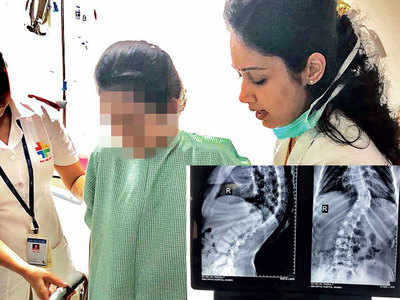
14-yr-old’s spine deformity corrected by city doctors


City doctors gave a new lease of life to 14-year-old Shreya Desai (name changed), a Mumbai resident, who was born with a spine deformity. She was born with an abnormal gait that was tiled on one side. Her parents noticed the condition when it became prominent, resulting in a constant source of worry for the family.


14-yr-old’s spine deformity corrected by city doctors

An eight-hourlong surgery was performed and the hemivertebra excision was done


She often had to tilt her head in order to converse with people. She was suffering from a birth defect known as congenital scoliosis — sideways curvature of the spine that is caused by a defect that was present at birth caused by vertebrae that are not properly formed. Such a patient has no other option but to correct the defect through a surgery. Shreya’s case was extreme as the curve was already 75 degrees, and her short torso made it exceedingly uncomfortable for her. She was operated on September 10 at Ruby Hall Clinic in Wanowrie and was able to walk just three days later.

Dr Bhushan Khedkar, consultant spine surgeon, Ruby Hall Clinic, said, “The backbone helps hold the body upright. Without the spine’s gentle curve down the back, a person cannot balance, walk or move properly. With scoliosis, children whose curve is around 45 or 50 degrees are usually surgical candidates. Shreya’s curve was already 75 degrees. Therefore, surgical correction was the only option.”


An eight-hour-long surgery was performed and the hemivertebra excision was done for correcting the deformity. The spine was straightened and secured in place with rods and screws to stop the curve progression. “There is always a risk of impending spinal cord injury with such surgeries along with the possibility of loss of power in lower limbs and loss of bladder and bowel control. For this purpose, neuromonitoring was used throughout the procedure thereby reducing the occurrence of spinal cord injury,” added Khedkar.


Shreya’s father Niranjan Desai, shared, “We are so glad the surgery was completed without any complications. I am happy to see my daughter walking perfectly just a couple of days after the surgery. The team at the hospital has been supportive and we could see our daughter happier and confident after the treatment.”


Dr Shailesh Hadgaonkar, director of spine services at Sancheti Clinic, Pune, said, “Children at a young age with a suspicion of deformity need to be screened immediately. If they are provided timely customised bracing and exercises, we can avoid progression of such kind of a deformity. Congenital deformities are a challenge.

When there is a cosmetic deformity, this curve needs correction. Neuro-monitoring is mandatory nowadays for such surgeries that improve safety during spine correction procedures.”


Source : Pune Mirror , 23 Sep 2018 


Sunday, 16 September 2018

Doctors at Apollo Hospitals correct abnormal spine


According to a press release from the hospital, Shreya started showing signs of deformity at the age of 12. She experienced pain and was unable to carry on her day-to-day activities.


Doctors at Apollo Hospitals successfully performed a fusionless scoliosis surgery on a 14-year-old girl who was affected by scoliosis, an abnormal sideward curvature of the spine.

According to a press release from the hospital, Shreya started showing signs of deformity at the age of 12. She experienced pain and was unable to carry on her day-to-day activities. The girl was diagnosed with Adolescent Idiopathic Scoliosis (AIS) at Apollo Hospitals.
This abnormal sideward curvature of the spine is usually seen in young girls aged 8 years to 12 years. It affects two to three per cent of children between the ages of 10 and 18.
Traditionally, fusion surgical treatment is performed to address AIS, where metal implants are attached to the spine and then connected to two rods. These implants hold the spine in a corrected position until the instrumented segments fuse as a single bone.
Compared to the fusion surgery, fusionless scoliosis surgery aims to support spine growth and movement. In fusion-less scoliosis surgery, the deformity is corrected using a flexible cable. Fusionless scoliosis surgery is a shorter, less invasive, and less expensive surgery that preserves motion and function in patients while lessening the chance of back pain later in life.
In fusionless scoliosis surgery, the patients can return to normal activities faster. Shreya is on physiotherapy, her posture has improved. Her ribcage, trunk and shoulders are aligned, and getting better. She is back to her daily activities.


Source : The New Indian Express , 5 Sep 2018