! STOP BENDING NOW !

Monday, 2 March 2015

Standing up strong for scoliosis

Sara Cochran thought life was going smoothly until, as a student at Leonardtown Middle School five years ago, she was told she had a debilitating curve in her spine.

Emily Clark, left, 17, of Leonardtown, Sara Cochran, 18, of Leonardtown and Gabby Mesmer, 14, of Hollywood, are members of the Curvy Girls of Southern Maryland support group.

She discovered online a support group for girls with scoliosis — the medical condition she was told she had. The group was based in another state, so Cochran and a friend decided to start their own group to develop a network of support locally.


The Curvy Girls of Southern Maryland scoliosis support group allows girls to share challenges associated with scoliosis treatment, update each other on their own progress and, well, have “girl talk.”

People with scoliosis, most frequently females, have an abnormal curve of the spine. It is typically caused by anomalies present at birth.

Conventional treatment for scoliosis is through braces and/or surgery.

Members of the Curvy Girls each have their own challenges and treatments. Some wear braces nearly every hour of every day, while others only wear them at night or a couple hours a day.

“You don’t always need treatment,” depending on the severity of the spinal curve, Cochran said.

By meeting others at different points of the treatment process and hearing encouragement from their peers, the girls can feel empowered, she said.


Some members, like Emily Clark, have gotten to the point where they no longer need to wear a brace. Some have had surgery to mostly correct the spinal curve.


Clark, a junior at Leonardtown High, was diagnosed when she was in second grade. She first wore a brace in middle school.

“Now I’m out of my brace, and everything is back to ‘normalish,’” she said.

 
She’s a cheerleader at the school, and no longer needs the brace now that she’s basically reached the peak of her growth, she said.

 
“Growth spurts tend to make the curve grow,” she said, adding that for every 2 inches of growth a person often needs to get a new brace.


Clark said she was told people with scoliosis can play any sports, as long as they are not full-contact, like football or lacrosse.


Cochran and Anna Staats, a sophomore at Great Mills High School, organized the Southern Maryland chapter of Curvy Girls Scoliosis Support Group in November 2010, just before Cochran underwent surgery to help correct the curve in her spine.


“That was so exciting,” she said of the group’s first meeting.


Cochran, then 13, had been diagnosed with the condition about a year and a half earlier, and had been wearing a back brace for about a year. She discovered the support group online and had found it helpful to hear others’ stories.


She decided to start the local group after hearing about other girls who had scoliosis so they could comfort each other and stem feelings of loneliness.


Now 18, Cochran is planning to go away to college soon.


“I’m hoping to pass over the leadership role to one of the other girls” so the group will continue in Southern Maryland, she said.


The group usually meets once a month at Cochran’s home in Leonardtown. While the girls — usually a half dozen or so of them — hold an official meeting, their parents also hang out and talk.


“It’s very important to have a positive outlook on scoliosis, your situation and your life,” Cochran said. “My story is my story, and if it can offer support for someone, well, that’s why I share it.”


Gabby Mesmer, an eighth-grader at Leonardtown Middle School, underwent surgery for scoliosis in November. She had to miss several weeks of school during recovery, but is back up and feeling fine now, she said.


She didn’t know much about the condition when she was first diagnosed in sixth grade, although a friend from school also had been diagnosed and told her about the support group.


Since attending the meetings, Mesmer said she’s learned that she’s not alone with her condition, and has found an outlet to talk about scoliosis.


There are girls from about fifth grade and older in the group, including kids from St. Mary’s, Calvert and Charles counties.

Curvy Girls is an international network of peer-led, teen support groups that meet in person and via social media and email. Chapters have spread throughout the United States, Canada, South America, Europe, Great Britain and Australia.

The organization was started by Leah Stoltz of Long Island, N.Y., to bring together girls with of scoliosis for encouragement.

Cochran met Stoltz several ago in Washington, D.C., to talk about the venture.

“Sara reminds me of me,” Stoltz said in a 2010 statement in The Enterprise. “She wants to talk to others going through this and help them not feel alone. I am so excited that Sara brings to Maryland what I started four years ago in another part of the country.”

Through the national organization, the girls have discovered that others with the condition may not have the access to medical treatment available here.

They launched a fundraising effort with a goal of raising $5,000 for Victoria, a 14-year-old girl from Ghana who needs spinal fusion surgery to correct her scoliosis.

The group held a couple of small fundraisers already, and Clark is organizing a 5K race later this summer to raise awareness and funds.

The total cost of surgery could top $20,000, Cochran said.

 
“It can change your life for the better,” said Cochran, who had surgery on her back when she was in eighth grade.


And, she said, just being able to talk to a group of friends who are going through a similar situation can have a positive impact, too.

jyeatman@somdnews.com


Source:  somdnews, 25th Feb 2015

A twirl with pain: Ballet dancer fights through scoliosis


Ballet Dancer Fight

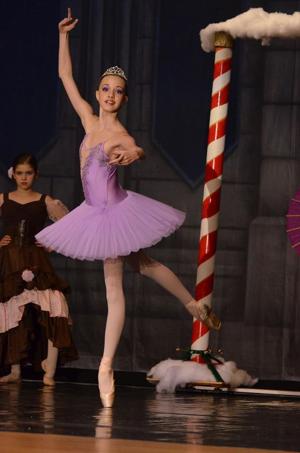
Colby Saltz performs as the Sugarplum Fairy in Texas Youth Ballet Conservatory’s “Krakatuk: A Nutcracker Prequel.” The next night, after another performance, she had spinal fusion surgery.

This summer, Colby Saltz will grace Bolshoi Ballet Academy, one of the nation’s premier summer intensive programs. A few months ago, she didn’t know if she’d dance again.


Saltz, 14, a top performer with Texas Youth Ballet Conservatory (TYBC) in McKinney, is about eight weeks removed from spinal fusion surgery. Her upper spine no longer juts sideways, though a reminding scar peeks from her ballet dress, a symbol of her unyielding desire.


“It’s been very inspirational,” said Jennifer Dulin, TYBC artistic director. “It is a real good example for the younger kids on what kind of determination is required.”

Saltz is a constant, quick learner, driven by dreams of a spot on an international company. For her, it’s a matter of when and with whom, not if.


She’ll have corrections fine-tuned in a day, and was accepted into every major summer intensive she applied for last year; only lack of funds kept her away.


Then a dancer’s worst nightmare happened.


Scoliosis most often develops in adolescence, between ages 10 to 15, and affects about 7 million people in the U.S., according to American Chiropractic Association. In many cases, the spine is curved at less than 20 degrees and not easily detected. The potential nightmare became Saltz’s sudden reality.


“That’s just like tearing her heart out,” Dulin said, “because she so wants to be a ballet dancer.”


On a studio day in October, Saltz wasn’t holding alignment, a maneuver she could do in her sleep, and Dulin noticed “a pretty significant curve” to her spine. That was enough for Saltz’s mother, Denise – they soon saw a specialist.


In a short span, her spine swiftly bent. Pushing for surgery, doctors shocked the mother and daughter, who expected maybe just a brace until Saltz was done growing.


“The first thing I thought was, ‘Will I be able to dance?” Saltz recalled.


Curvature to the lower spine can be more debilitating to movement, and Saltz’s was between her shoulder blades. Surgery was set, but she didn’t tiptoe away from ballet – not yet, and hopefully not ever.


In December, Saltz pranced as the Sugarplum Fairy for TYBC’s holiday performance, wincing inside from pain. That same night, she checked into the hospital and had her spine – the lifeblood of her passion – fixed.


Doctors predicted at least a few months of recovery, time for her back muscles to reinvent themselves. Saltz had other ideas. She’s determined to regain the flexibility and form she had such a short time ago.

And she nearly has, quickly and surely.


“She’s an incredibly dedicated girl,” her mother said. “There’s really nowhere else she’d rather be than the studio.”


This week she returned to her normal dance load: 20 to 25 hours, not including rehearsals and rehab at home. Curved spine or not, it’s a cake-spin compared to the upcoming intensive. At Bolshoi, it’ll be five-hour days, five days a week for six weeks.


First, though, are TYBC’s Spring Potpourri in March and its “Peter Pan” production in May. Saltz will dance complicated roles in both.


This setback may have prepped Saltz for the intensity more than anything. She said the injury has pushed her harder. In ballet, there’s no room on the stage for weakness or second-guessing. In fast order, the lesson is a tune Saltz chooses not to slow down to.


She’s gracefully, precisely twirling to it.


Source: Star Local Media, 22nd Feb 2015

The Scoliosis Research Society’s International Spine Award for Dr. Krishnakumar R., Consultant Spine Surgeon, AIMS


Dr. Krishnakumar R., Consultant Spine Surgeon at the Department of Orthopaedics, Amrita Institute of Medical Sciences has been awarded Scoliosis Research Society's inaugural Robert B. Winter Global Outreach Award in Spine Surgery.  The Scoliosis Research Society (SRS) is the world's leading organization of spine and scoliosis surgeons, and is based at Milwaukee, USA.


“I was deeply honoured to receive the award in the name of Robert B. Winter who was the past president of the Scoliosis Research Society and the Pediatric Orthopedic Society and a founding member of the Twin Cities Spine Center. He was an expert in the spine and scoliosis surgery as well as in research...The award was based on the experience in spine and scoliosis surgery, as well as on the ability to be a strong educator of surgeons in the region. The award worth 13,000 US Dollars facilitated visiting different spine centers across the globe,” said Dr. Krishnakumar.


During October 2014, Dr. Krishnakumar visited Istanbul Spine Centre at Florence Nightingale Hospital, Istanbul as part of the award, to join with Prof Azmi Hamzaoglu, who is the director of the spine services and a world famous spine surgeon.  “I had the opportunity to witness robotic spine surgery and exchanged views and ideas on adult scoliosis, spinal corrective surgeries and growing rod technique in congenital scoliosis.”  At Amrita, Dr. Krishnakumar practices extensively in the areas of deformity correction such as scoliosis surgery, spinal tumor surgery, degenerative spine surgery and minimally invasive spine surgery for disc prolapse and spinal fusion.


Dr. Krishnakumar joined Amrita Institute of Medical Sciences, Kochi in July 2010 after obtaining training in Spine Surgery from the Singapore General Hospital. He was also was a recipient of SRS Spine Surgery Fellowship at the Washington University. He previously received ISSLS international Spine fellowship and Eurospine awards. Dr Krishnakumar serves as AOSPINE INDIA council as delegate member from South India.


Source: Amrita.edu, 23rd Feb 2015

How 2 women keep on moving despite chronic ailments

Grapevine’s Yolanda Frasier and Dallas’ Beri Schwitzer have both battled serious, painful ailments.


Yolanda Frasier has battled with scoliosis since age 10. She completed the walker-friendly Fort Worth Marathon in approximately 8 hours, 30 minutes.


Frasier’s severe scoliosis caused her spine to shrink 5 inches, necessitated surgery and resulted in chronic discomfort. Schwitzer, who suffers from rheumatoid arthritis and Crohn’s disease, can’t recall a time when she didn’t experience joint pain.


They also are marathoners.


In 2011, both decided not to let their disabilities dictate their lives. They set specific goals, listened to their bodies and their doctors. They’ve lost weight and improved their health, all while regaining hope and self-acceptance.


“The biggest thing is I like myself,” says Frasier, 65. “I’m not where I want to be yet, but I realize it’s a lifestyle.”


From surgery to success


In the early ’90s, Frasier could no longer reach the dishes in her cabinets. She thought her husband was putting them on a higher shelf. Turns out, she was no longer 5-6. She was 5-1.


Frasier first became aware she had a sideways ‘S’ curve in her spine as a nationally competitive, preteen baton twirler. The woman making her costume noticed her right shoulder sticking out.


She didn’t experience pain in her youth. Physicians monitored her scoliosis with annual X-rays to early adulthood. She discontinued her annual checkups once she became a mother to her four sons.


In May 1999, Frasier underwent back surgery to halt further damage. The surgery involved removing a rib to open her chest cavity. After three months flat on her back, she wore a body brace for six months.


Within the year, she could walk with a cane, but she remained in constant pain for nearly four years, which later subsided, mostly. Then in 2010, her doctors warned she could need additional surgery.


“That’s when I got serious about weight loss and exercise,” says Frasier, who also has a family history of heart disease.


She began walking on a treadmill with a Gaylord Texan Hotel co-worker. They consistently walked, slowly and steadily extending the distance. In October 2011, they registered for their first 5K. They enjoyed it so much they walked one a month through 2012.


From there, Frasier worked her way from 5Ks to 10Ks, 15Ks and half-marathons by late 2013. That’s when she decided to attempt a marathon. She found the walker-friendly Fort Worth Marathon and signed up. She enlisted an endurance coach and continued increasing her mileage. She never lost focus even when two family members were found to have cancer last year.


She completed the marathon in approximately 8 hours, 30 minutes.


“I just kept going,” she says. “I had to finish. I get very excited when I have done something I said I was going to do.”


Frasier’s biggest challenge is avoiding falls. She has to watch the ground and focus on lifting her left foot up so it doesn’t drag. Her body doesn’t twist, so she has to stop when she wants to look around.


Once she began working out, she also started eating more healthfully. Over the last three years, she has lost 60 pounds.


“I decided I wouldn’t let my back dictate what I was going to do, and I’m not going to let pain dictate it, either.”


A motivating force


Growing up, Schwitzer didn’t let her rheumatoid arthritis prevent her from playing tennis or running on her high school’s cross-country team. She completed five half-marathons in her early 20s.

By her mid-20s, her arthritis pain became intolerable. She also endured chronic intestinal flare-ups, the result of Crohn’s and celiac disease, which were diagnosed in 2010. Her doctors prescribed steroids to manage her pain and illnesses. The steroids resulted in weight gain.


“I thought I would always be overweight and sick,” she says. “I thought I’d never get well.”


With a proper diagnosis in 2010, she has been better able to manage the inflammatory autoimmune diseases. She’s eliminated triggers, which has alleviated some symptoms.


As she began feeling better, Schwitzer said she was inspired to make lifestyle changes by watching her mother-in-law. Marsha Schwitzer had undergone gastric bypass and begun running after a lifetime of struggling with her weight. Marsha’s renewed zeal for life empowered Schwitzer to make changes.


Soon after, severe abdominal pain led to Marsha’s diagnosis of ovarian cancer. She died in October 2011.


“Her death started my rebirth,” says Schwitzer, 41, who began running and has lost 90 pounds since

Marsha’s death. “I just need to be moving. I don’t need to be fast.”


In early 2013, Schwitzer received an email about running the New York City Marathon and raising funds for Sharsheret, a national group that supports Jewish women facing breast and ovarian cancer.


“It was just this weird, cosmic thing that happened,” says Schwitzer, who immediately enlisted her husband’s sister, Eve, to run with her. “I wasn’t afraid of the money or the miles. I wanted to do this for Mom. There was no stopping us.”


Schwitzer ran in the pool when her joints couldn’t take the pounding. She focused on proper biomechanics, stretching, ice baths and massage to get through the training. In November 2013, she and Eve completed the New York marathon in more than eight hours.


Along the way, Schwitzer befriended others who were struggling. She never felt discouraged or doubted she could finish. “We were doing everything we could to motivate each other,” she recalls.


“There’s always this moment when Eve and I run, when the clouds open up, and the sun shines,” Schwitzer says. “We know that sun on our shoulders is Mom. This gift she gave us is our family and our passion for taking care of our health. It’s all interwoven.”


Advice from their doctors


Grapevine-based orthopedic spine surgeon Dr. Melanie Kinchen didn’t perform Frasier’s back surgery, but she now monitors her back. Kinchen, the founding partner of 360 Back and Spine Center, says she encourages patients like Frasier to stay as active as they can.


Schwitzer now works with Dr. Lezlie Maloy, a Dallas chiropractor and nationally certified corrective exercise specialist. Maloy says there are few conditions where the risks of exercising outweigh the benefits.


“We know that exercising stimulates the body in a way that helps to reduce stress and inflammation and promote energy and overall health,” Maloy says. “When dealing with folks with chronic illness, it is important to tailor exercise in a way that supports the illness rather than promotes the illness.”


People who are fit usually have better balance and stronger muscles, which are key to overall physical well-being, Kinchen says.


For anyone with physical limitations who is interested in starting an exercise routine, Kinchen and Maloy recommend checking with one’s treating physician, starting and progressing slowly, focusing on moderation and considering low-impact activities.


“I’ve seen cases where, because of a new commitment to exercise, medications needed to be altered or changed,” Maloy says.


In addition, Maloy encourages such individuals to seek advice from musculoskeletal specialists about types of exercise that would be well-suited to body type, ability and overall health. Specialists such as Maloy can assess fitness levels and prescribe rehab or prehab techniques to help a patient get to a state in which it’s safe to work out individually, in a group or with a personal trainer.


Nutrition also is critical, Maloy says, adding that many foods we eat daily are the cause of chronic pain.


Kinchen says she rarely gives her patients restrictions once they have fully recovered from a procedure.

“They have to decide how much pain they’re willing to tolerate,” she said. “It’s personal choice.”


Debbie Fetterman covers running news at runningblog.dallasnews.com. 


Source: Dallas News , 27th Feb 2015

Surgical treatment of Lenke 1 thoracic adolescent idiopathic scoliosis with maintenance of kyphosis using the simultaneous double-rod rotation technique.

Abstract

STUDY DESIGN: Retrospective analysis of a prospectively collected, consecutive, nonrandomized series of patients.

OBJECTIVE: To assess the surgical outcomes of the simultaneous double-rod rotation technique for treating Lenke 1 thoracic adolescent idiopathic scoliosis (AIS).


SUMMARY OF BACKGROUND DATA: With the increasing popularity of segmental pedicle screw spinal reconstruction for treating AIS, concerns regarding the limited ability to correct hypokyphosis have also increased.


METHODS: A consecutive series of 32 patients with Lenke 1 main thoracic AIS treated with the simultaneous double-rod rotation technique at our institution was included. Outcome measures included patient demographics, radiographical measurements, and Scoliosis Research Society questionnaire scores.


RESULTS: All 32 patients were followed up for a minimum of 2 years (average, 3.6 yr). The average main thoracic Cobb angle correction rate and the correction loss at the final follow-up were 67.8% and 3.3°, respectively. The average preoperative thoracic kyphosis (T5-T12) was 11.9°, which improved significantly to 20.5° (P < 0.0001) at the final follow-up. An increase in thoracic kyphosis was significantly correlated with an increase in lumbar lordosis at the final follow-up (r = 0.42). The average preoperative vertebral rotation angle was 19.7°, which improved significantly after surgery to 14.9° (P = 0.0001). There was no correlation between change in thoracic kyphosis and change in apical vertebral rotation (r =-0.123). The average preoperative total Scoliosis Research Society questionnaire score was 3.0, which significantly improved to 4.4 (P < 0.0001) at the final follow-up. Throughout surgery and even after, there were no instrumentation failures, pseudarthrosis, infection of the surgical site, or clinically relevant neurovascular complications.

CONCLUSION: The simultaneous double-rod rotation technique for treating Lenke 1 AIS provides significant sagittal correction of the main thoracic curve while maintaining sagittal profiles and correcting coronal and axial deformities.


LEVEL OF EVIDENCE: 4.

PMID: 24732855 [PubMed - indexed for MEDLINE]


Spine (Phila Pa 1976). 2014 Jun 15;39(14):1163-9

Authors: Sudo H, Ito M, Abe Y, Abumi K, Takahata M, Nagahama K, Hiratsuka S, Kuroki K, Iwasaki N


Source: London Spine , 25th Feb 2015

CASE REPORT: EXTREME PATIENT POSITIONING FOR RETINAL SURGERY IN ADVANCED KYPHOSIS.

KYPHOSIS."

To describe the atypical intraoperative positioning of a kyphosis patient resulting in successful retinal detachment repair.

Affiliation

Journal Details

This article was published in the following journal.
Name: Retinal cases & brief reports ISSN: 1937-1578
Pages:

Links

  • PubMed Source: http://www.ncbi.nlm.nih.gov/pubmed/25723117
  • DOI: http://dx.doi.org/10.1097/ICB.0000000000000142


    Moving a patient into a specific position or POSTURE to facilitate examination, surgery, or for therapeutic purposes.


    Specialized ophthalmic technique used in the surgical repair and or treatment of disorders that include retinal tears or detachment; MACULAR HOLES; hereditary retinal disease; AIDS-related retinal infections; ocular tumors; MACULAR DEGENERATION; DIABETIC RETINOPATHY; and UVEITIS.


    The period of care beginning when the patient is removed from surgery and aimed at meeting the patient's psychological and physical needs directly after surgery. (From Dictionary of Health Services Management, 2d ed)


    A membrane on the vitreal surface of the retina resulting from the proliferation of one or more of three retinal elements: (1) fibrous astrocytes; (2) fibrocytes; and (3) retinal pigment epithelial cells. Localized epiretinal membranes may occur at the posterior pole of the eye without clinical signs or may cause marked loss of vision as a result of covering, distorting, or detaching the fovea centralis. Epiretinal membranes may cause vascular leakage and secondary retinal edema. In younger individuals some membranes appear to be developmental in origin and occur in otherwise normal eyes. The majority occur in association with retinal holes, ocular concussions, retinal inflammation, or after ocular surgery. (Newell, Ophthalmology: Principles and Concepts, 7th ed, p291)

    The care and treatment of a convalescent patient, especially that of a patient after surgery.


    Source: Bioportfolio, 2nd March 2015 

Saturday, 21 February 2015

Physical activities of Patients with adolescent idiopathic scoliosis (AIS): preliminary longitudinal case-control study historical evaluation of possible risk factors


To our knowledge there are no publications that have evaluated physical activities in relation to the etiopathogenesis of adolescent idiopathic scoliosis (AIS) other than sports scolioses. In a preliminary longitudinal case-control study, mother and child were questioned and the children examined by one observer.

The aim of the study was to examine possible risk factors for AIS. Two study groups were assessed for physical activities: 79 children diagnosed as having progressive AIS at one spinal deformity centre (66 girls, 13 boys) and a Control Group of 77 school children (66 girls, 11 boys), the selection involving six criteria.A structured history of physical activities was obtained, every child allocated to a socioeconomic group and examined for toe touching.

Unlike the Patients, the Controls were not X-rayed and were examined for surface vertical spinous process asymmetry (VSPA). Statistical analyses showed progressive AIS to be positively associated with social deprivation, early introduction to indoor heated swimming pools and ability to toe touch.

AIS is negatively associated with participation in dance, skating, gymnastics or karate and football or hockey classes, which might suggest preventive possibilities. There is a significantly increased independent odds of AIS in children who went to an indoor heated swimming pool within the first year of life (odds ratio 3.88, 95% CI 1.77-8.48; p = 0·001).

Furthermore fourteen (61%) Controls with VSPA compared with 9 (17%) Controls without VSPA had been introduced to the swimming pool within their first year of life (P <0.001). Early exposure to indoor heated swimming pools for both AIS and VSPA, suggests that the AIS findings do not result from sample selection.


Source: 7th Space, 18th Feb 2015